Overview
SafeAbroad analysts have assessed that China enters the peak of its annual typhoon season between July and September, when tropical cyclones in the western North Pacific are most likely to affect the country’s southern and eastern coastlines. Provinces including Guangdong, Fujian, Zhejiang, Hainan, Guangxi, Shanghai, and Hong Kong are particularly exposed to impacts such as destructive winds, storm surge, flooding, landslides, and widespread transport disruption.1
For international students and study abroad programs, typhoons are unlikely to result in prolonged nationwide disruption but can significantly impact local operations. Flight cancellations, rail service suspensions, university closures, power outages, and restrictions on outdoor activities are common during severe weather events.2
Background
The western North Pacific is the world’s most active tropical cyclone basin, producing approximately 25–30 named tropical cyclones each year, with several making landfall in China.3
The official typhoon season extends from May through November, although the highest frequency of landfalls typically occurs from July to September.4 China’s coastal provinces experience varying levels of exposure to impact from typhoons, depending on the storm tracks. Guangdong historically records the greatest number of typhoon landfalls, while Fujian, Zhejiang, Hainan, and Guangxi also experience frequent impacts.5 Inland provinces can also experience significant flooding after tropical cyclones move inland and weaken, particularly where heavy rainfall overwhelms drainage systems.6
Typhoons often disrupt domestic transportation networks. Airports may suspend operations, high-speed rail services are frequently delayed or cancelled, ferry services cease operation, and road closures may occur due to flooding or landslides.7 The most recent Typhoon Bavi, has resulted in over 2800 flights being cancelled inbound and outbound by Chinese airlines.8 Universities in affected regions may temporarily suspend classes or advise students to remain indoors while local authorities issue emergency warnings.9
China’s forecasting capability has improved significantly through the China Meteorological Administration (CMA), which issues advance warnings using a four-tier colour-coded alert system (Blue, Yellow, Orange and Red). These alerts provide progressively higher levels of warning as a typhoon approaches, enabling local governments, universities, transport operators, and emergency services to implement precautionary measures such as suspending classes, cancelling flights and ferry services, restricting outdoor activities, evacuating high-risk coastal areas, and issuing public safety advisories before severe weather arrives.10
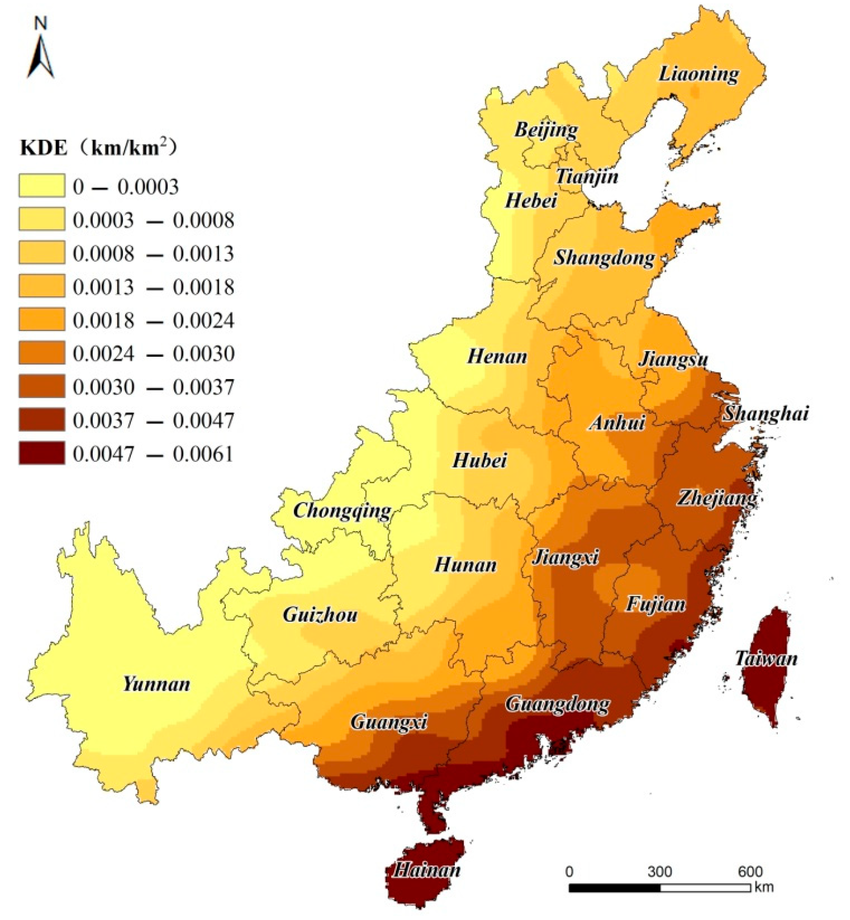
Standard deviations of typhoon hazard distribution across China.11
Operational Implications for Study Abroad Programs
The primary risks for study abroad students during the typhoon season are expected to be operational rather than security-related. Programs in coastal cities should anticipate periodic disruptions to travel, accommodation logistics, and planned excursions, particularly between July and September.
The most likely impacts include:
- Flight delays and cancellations affecting student arrivals, departures, and domestic travel.
- Suspension of high-speed rail, metro, ferry, and bus services during severe weather.
- Temporary university closures or movement of classes online.
- Flooding that restricts movement around campuses and city centres.
- Power outages and intermittent telecommunications disruptions in areas experiencing direct landfall.
- Increased risk of landslides and flash flooding during or immediately after periods of prolonged rainfall.
Students participating in fieldwork, cultural excursions, or independent travel along the southeast coast face greater exposure due to increased time spent outdoors and reliance on transportation infrastructure. Coastal recreation, island travel, and water-based activities may also be suspended for several days before and after a typhoon makes landfall.12
Despite these disruptions, China’s emergency response capability generally enables a rapid recovery following most typhoon events.13 The greatest challenge for study abroad providers is maintaining operational flexibility while ensuring students receive timely information regarding changing weather conditions.
On the Horizon
The peak of China’s typhoon season is expected to hit in August and continue through September before gradually declining during October.14
Study abroad providers should continue monitoring forecasts issued by the China Meteorological Administration and local authorities, particularly for programs located in Guangdong, Fujian, Zhejiang, Hainan, Shanghai, and Hong Kong. Operational planning should prioritise flexible travel arrangements, contingency accommodation options, and clear communication procedures to minimise disruption should severe weather affect program activities.
What to watch for over the coming months:
- Additional typhoon landfalls are likely along China’s southern and eastern coastline through September, with Guangdong, Fujian and Zhejiang expected to remain at the greatest risk of direct impacts during the climatological peak of the season.15 These storms may bring destructive winds, heavy rainfall, coastal flooding and storm surge, increasing the risk of flash flooding, landslides and disruptions to critical infrastructure. Programs operating in affected coastal regions should anticipate short-notice changes to travel schedules, outdoor activities and university operations as authorities implement precautionary measures in response to severe weather.
- Transport disruptions are expected to remain the most significant operational challenge for study abroad programmes.16 Flight cancellations, high-speed rail suspensions and ferry service interruptions are likely during periods of severe weather, particularly in major transport hubs such as Shanghai, Guangzhou and Shenzhen. These disruptions may delay student arrivals and departures, interrupt planned excursions, and require providers to implement alternative travel arrangements or adjust programme schedules at short notice.
- Short-notice changes to university operations and programme itineraries are likely during high-impact weather events.17 Universities may temporarily suspend classes, move teaching online or restrict campus activities, while planned excursions and independent student travel may require postponement or cancellation. Providers should be prepared for rapidly changing operational requirements and maintain regular communication with partner institutions and students to ensure timely updates and minimise disruption.
While widespread program cancellations remain unlikely, localised disruptions associated with typhoon activity should be anticipated throughout the remainder of the peak season. Early monitoring of weather advisories and rapid implementation of contingency plans will help reduce operational impacts and support student safety.
- https://www.tripsavvy.com/weathering-typhoon-season-in-china-1495475 ↩︎
- https://www.globaltimes.cn/page/202607/1365699.shtml ↩︎
- https://www.sciencedirect.com/science/article/abs/pii/S0921818125004035 ↩︎
- https://www.tripsavvy.com/weathering-typhoon-season-in-china-1495475 ↩︎
- https://cp.copernicus.org/articles/15/279/2019/ ↩︎
- https://www.sciencedirect.com/science/article/abs/pii/S0921818125004035 ↩︎
- https://tourexpi.com/en-intl/news/typhoon-bavi-disrupts-air-travel-across-china-with-thousands-of-flight-cancellations-217462.html ↩︎
- https://www.aa.com.tr/en/asia-pacific/thousands-of-flights-canceled-delayed-in-china-due-to-thunderstorms-caused-by-typhoon-bavi/3995445 ↩︎
- https://www.fed.cuhk.edu.hk/en/bad_weather_arrangement/ ↩︎
- https://news.cgtn.com/news/2025-08-09/Explainer-China-s-4-tier-emergency-response-system-1FHmbI9uZOg/p.html ↩︎
- https://www.researchgate.net/figure/Standard-deviations-of-typhoon-hazard-index-distribution-across-China_fig5_349465263 ↩︎
- https://www.bbc.co.uk/news/articles/cdxd3wkp2rzo ↩︎
- https://news.cgtn.com/news/2026-07-12/China-ramps-up-emergency-response-as-Typhoon-Bavi-hits-eastern-regions-1OILVqRGlpu/p.html ↩︎
- https://www.tripsavvy.com/weathering-typhoon-season-in-china-1495475 ↩︎
- https://www.reuters.com/business/environment/catastrophic-storms-test-chinas-resilience-2026-scientists-warn-2026-07-08/ ↩︎
- https://www.scmp.com/news/china/politics/article/3360257/thousands-flights-cancelled-typhoon-bavi-hits-eastern-china-bringing-heavy-rains ↩︎
- https://www.scmp.com/news/hong-kong/health-environment/article/3360734/hong-kong-suspends-classes-red-rainstorm-warning-issued ↩︎