
Overview
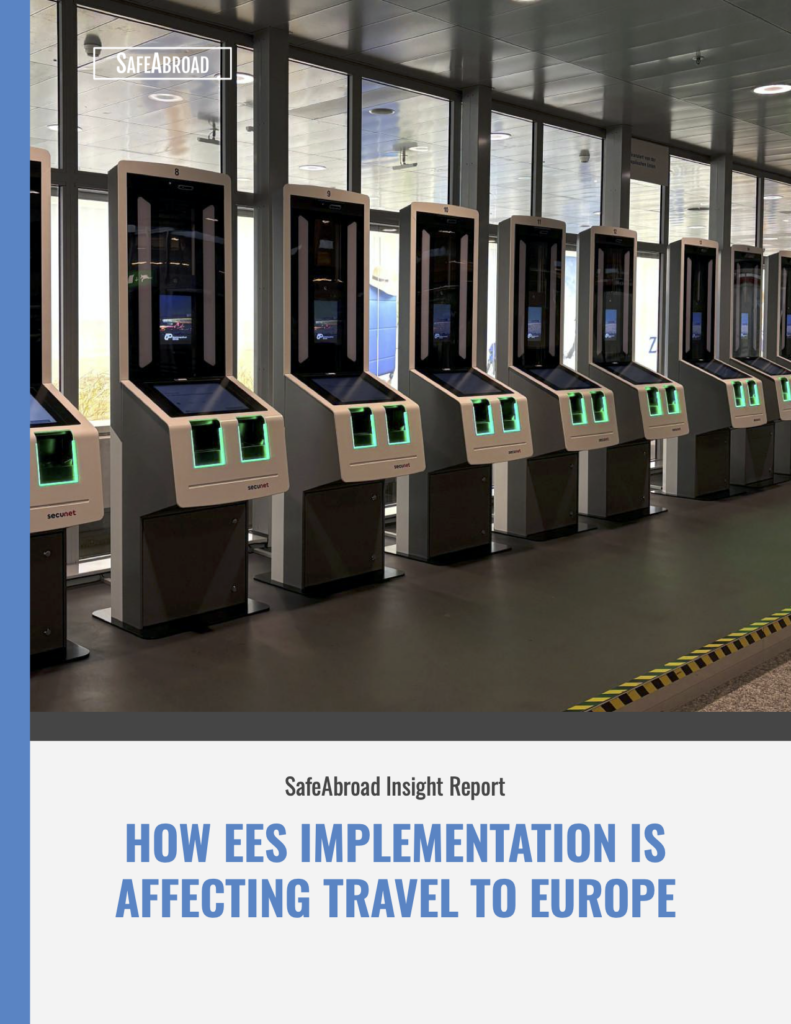
SafeAbroad analysts have analyzed the rules and expected impacts of the full implementation of Europe’s Entry/Exit System. The collection of travelers’ biometric data has already resulted in delays at ports of entry into the Schengen zone, with more delays likely amidst the summer travel season. Travelers should be aware of what this new system entails to best mitigate its effects on their plans.
Key Takeaways
- The Entry/Exit System (EES) will be fully implemented across the Schengen area starting April 10. Travelers visiting any of the 29 participating nations will be required to give biometric information. Despite the full implementation date, system suspensions are allowed through early July to alleviate excessive wait times and delays.
- Travelers are not required to register in advance. No advance registration or forms are required before departure. Biometric information will be recorded at ports of entry.
- Increased wait times resulting from EES implementation are highly likely. Significant delays have resulted from the system’s rollout, dating back to October 2025. Several nations and international transportation groups have already begun calling for the suspension of the system, especially in anticipation of upcoming summer crowds.
Background
Most travelers will be required to provide biometric information at ports of entry.
The Entry/Exit System (EES) is a tool being implemented by the European Union (EU) to register travelers staying for up to 90 days in the Schengen area within a 180-day window.1 Those who are not a citizen of any EU nations that are a part of the Schengen area, Norway, Lichtenstein, Switzerland, or Iceland will need to register upon entry.2 EES is meant to reduce irregular migration, increase security within the Schengen area, and make border crossings faster and more efficient.3 Affected travelers will be required to give biometric information at ports of entry, including fingerprints and facial photographs. This information will replace physical stamps in passport books. Those with biometric passports can speed up their entry by utilizing self-service systems before meeting with passport control officers; however, biometric passports are not necessary for entry.4 This information will be stored for three years following the date when the traveler exits the Schengen area.5 EES is separate from the European Travel Information and Authorization System, which will require an application and €20 fee before entry into the EU, which is set to launch at a currently unspecified date in the last quarter of 2026.6
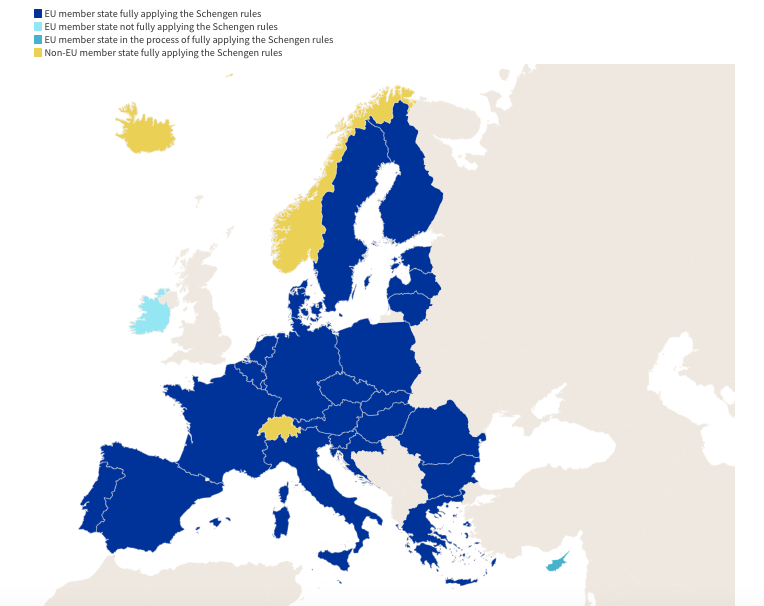
The Schengen area consists of 25 EU countries and 4 non-EU countries that do not carry out checks at their borders within the area while having uniform entry rules regarding travel from outside the area.8 Ireland and Cyprus constitute the only EU nations that are not part of the Schengen system. The EES system began to roll out on October 12, 2025, with its full implementation required across all Schengen countries starting April 10.9 While all 29 nations have started to implement the rules, they have been selectively lifted to limit travel delays.10 11
Implementation of the EES system has often led to massive delays at airports during peak times. Mandatory tracking of 50% of third-country nationals (those not from Schengen nations), which came into effect on March 10, has led to up to two hours in wait times during peak hours across European airports.12 13 In order to handle summer crowds, EES rules are allowed to be suspended by member states for up to 90 days after April 10 (July 9) with a possible 60-day extension (September 7).14 Several airports have already requested a suspension of EES implementation over the summer, warning of five to six-hour-long queues.15
EES registration also applies to land crossings as well, including international trains. Biometric information is recorded upon arrival into the Schengen area; limited opportunities exist to pre-register before departure however these offerings are currently inconsistent.16 17EES registration may also be required before departure or upon arrival for ferries based on routes.18
Technical difficulties with EES technology and current data-collation limitations mean that the suspension of biometric data collection for cross-border trips is also likely. Eurostar trips between the UK and France will not collect this information over the coming weeks despite the deadline.19
Traveler Guidance
The guidance below can facilitate smoother travel in accordance with the new EES regulations:
- Utilize self-service systems to speed up processing. Those with biometric passports can provide their information at self-service kiosks when such systems are available. This will significantly reduce wait times. All US passports issued after 2007 are biometric.20 Travelers will, however, still need to check in with a processing official afterward.
- The Travel to Europe app can facilitate faster entry into Sweden and Portugal. The app can be used to reduce wait times by submitting information, including a picture of one’s face, within 72 hours of arrival.21 Travelers will still be required to be processed upon arrival.
- Travelers must register at the first airport they land at within the Schengen area. Even if the first airport within the Schengen area is simply a connecting flight, they will be required to register with the EES and provide biometric information.22
- Arrive early and expect delays. Delays will compound during the busy summer travel season, during peak hours, on busy routes, and amid technical difficulties. To avoid missing your trip, arrive early.
- https://travel-europe.europa.eu/ees/what-is-the-ees
↩︎ - https://travel-europe.europa.eu/ees/what-is-the-ees
↩︎ - https://travel-europe.europa.eu/ees/what-is-the-ees
↩︎ - https://www.eucom.mil/document/43018/faqs—eu-entry-exit-system-eespdf
↩︎ - https://eur-lex.europa.eu/legal-content/EN/TXT/?uri=CELEX%3A02017R2226-20210803#B-20
↩︎ - https://travel-europe.europa.eu/en/etias
↩︎ - https://www.consilium.europa.eu/en/infographics/schengen-visa/
↩︎ - https://www.consilium.europa.eu/en/policies/schengen-area/#schengen
↩︎ - https://travel-europe.europa.eu/ees/faq#do-i-need-a-biometric-passport-to-cross-the-borders
↩︎ - https://travel-europe.europa.eu/ees/faq#do-i-need-a-biometric-passport-to-cross-the-borders
↩︎ - https://www.euronews.com/travel/2026/04/06/europes-entryexit-system-ees-what-travellers-need-to-know-before-10-april-rollout
↩︎ - https://www.aci-europe.org/media-room/589-disruption-risks-mounting-with-full-schengen-entry-exit-system-rollout-kicking-in-during-easter-travel-peak.html
↩︎ - https://emergency.unhcr.org/protection/legal-framework/third-country-nationals%E2%80%99-definition
↩︎ - https://etias.com/articles/eu-entry/exit-system-full-implementation-still-april-9,-with-flexibility
↩︎ - https://www.yahoo.com/news/articles/eu-entry-exit-system-rollout-120017010.html
↩︎ - https://help.eurostar.com/faq/us-en/question/What-s-the-EU-s-Entry-Exit-System-EES
↩︎ - https://www.businesstravelnewseurope.com/Management/EU-s-Entry-Exit-System-to-be-fully-implemented-this-week
↩︎ - https://www.poferries.com/en/travel-information/ees#route
↩︎ - https://www.theguardian.com/world/2026/apr/04/biometric-checks-stalled-again-for-cross-channel-travellers
↩︎ - https://photoaid.com/blog/biometric-passport/
↩︎ - https://travel-europe.europa.eu/ees/Travel-to-Europe-mobile-app
↩︎ - https://www.lufthansa.com/om/en/prepare-for-your-trip/entry-regulations/entering-schengen/entry-exit-system.html
↩︎