
Overview
SafeAbroad analysts have assessed the important aspects of Hantavirus for travelers, including the transmission, symptoms, prevention measures and risk profile of the illness. This report aims to spread awareness regarding respiratory illness, ensuring student travelers can remain confident and safe during their study abroad.
Key Takeaways
- Hantavirus is primarily spread through contact with infected rodents or their droppings, urine and saliva. Unlike COVID-19, Hantavirus is a rare, yet infectious disease where individuals come in contact with infected rodents, particularly in enclosed and poorly ventilated spaces, such as cabins, storage units or sheds. In some cases the virus can be contracted airborne with contaminated dust.
- Person-to-person spread of Hantavirus is rare. Most strains of hantavirus cannot be spread from person-to-person, although the Andes strain has shown human transmission. Although human transmission requires close and prolonged contact with an infected individual, such as direct physical contact with infected persons, prolonged time in enclosed spaces or intimate contact with infected persons. Simple prevention measures can be put in place such as maintaining clean living areas, storing food correctly and avoiding contact with rodents. Students in rural areas, camping, or staying in older accommodations should take additional care.
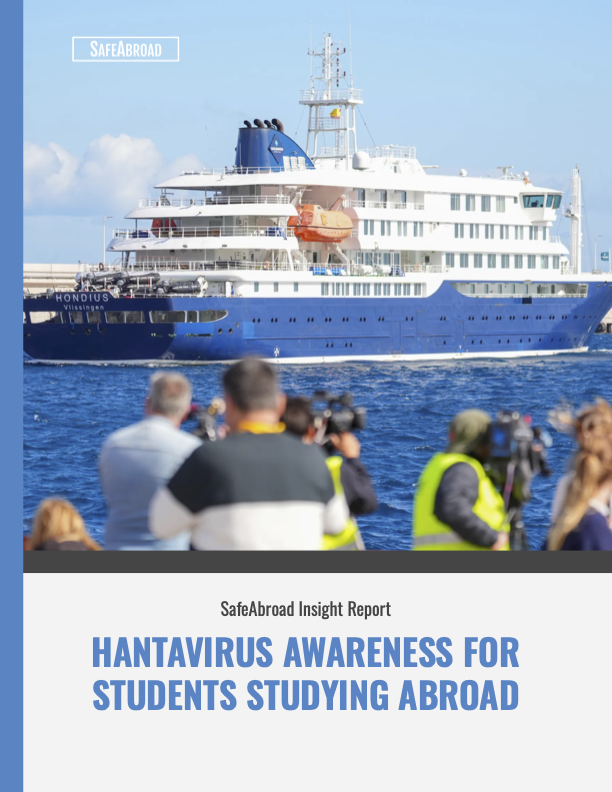
- The MV Hondius outbreak and the reality of human transmission of the Andes strain. The outbreak began when a passenger likely contracted the Andes virus strain on land before boarding. Because the ship provided an enclosed environment with prolonged close contact, the virus spread person-to-person among passengers. There have been a total of 9 confirmed cases and 3 deaths since the outbreak began.
Background
Hantavirus is a respiratory illness that poses minimal risk to international students studying abroad; basic health measures are advised to minimise transmission.
Hantavirus is a group of viruses that are primarily carried by rodents and can lead to severe illness if contracted by humans1. The virus was first recognised during the Korean War in the 1950s, where soldiers developed a severe illness, which was later linked to hantavirus2. Since then, there have been different strains of the virus that have been identified in Asia, Europe, North America and South America3.
Often symptoms of hantavirus initially resemble influenza including fevers, fatigue, and headaches. Symptoms after contracting the virus will start to present one to eight weeks after coming into contact with an infected rodent or individual. There are two major forms of illnesses that are a result of the hantavirus infection. Hantavirus Pulmonary Syndrome (HPS) is a severe disease that affects the lungs and breathing of an infected individual. Symptoms of HPS usually become present one to eight weeks after coming in contact with the infected. Symptoms of HPS consist of muscle aches, dizziness, and abdominal pains including vomiting and diarrhea. HPS is deadly with around 38% of individuals dying after developing symptoms of the disease4. Hemorrhagic Fever with Renal Syndrome (HFRS) is a severe disease that affects the kidneys. Symptoms of HFRS often develop one to two weeks after exposure with the infection, but some may take up to eight weeks. Symptoms of HFRS can include headaches, back pain, and blurred vision with worsening symptoms consisting of low blood pressure and acute kidney failure5.
Humans typically contract the virus by coming into contact with infected rodents’ urine, droppings, saliva, or in contaminated airborne dust particles6. The virus, if contacted in humans, can result in severe illness and potential death7. However, unlike other respiratory illnesses such as COVID-19, hantavirus does not generally spread easily from person to person and requires prolonged close contact in order to do so; outbreaks are typically isolated as opposed to community transmission. Typically transmission from person to person only happens between an individual who has symptoms and is showing signs of infection8.
Prevention of hantavirus consists of maintaining basic hygiene, maintaining a clean environment and avoiding contact with rodents. By following basic hygiene measures, travelers will lower the risk of spreading or contracting an infection. Awareness and education are important to lower infection risk and more clearly understand risks associated with Hantavirus.
Quarantine Efforts and International Response
Accidental drownings are largely Following the recent outbreak of the Andes strain on the cruise ship MV Hondius, countries have implemented quarantine protocols and responded with public health measures, focusing on isolation, monitoring and contact tracing.preventable and should be taken seriously.
- The 42-day monitoring window after the last known high-risk exposure is based on the maximum incubation period required to safely clear an individual of potential hantavirus infection. Health departments have implemented the 42-day monitoring window, which is double the incubation period of hantavirus which is used as a safety measure to ensure no cases are missed. For individuals who have been aboard the MV Hondius cruise ship, the 42-day monitoring period begins on the date of disembarkment of the ship, given no further exposures occur9. Unlike COVID-19, where an individual is contagious prior to symptoms or illness, hantavirus is generally only contagious once an individual is symptomatic.
- Countries including the United Kingdom, Spain, France, Netherlands and Australia have implemented temporary quarantine and observation measures. Returning passengers of the MV Hondius are required to complete a quarantine period, often being completed in a designated location (like a hotel, health facility or home). Individuals are required to report their temperature and health status two times a day to health professionals. During this quarantine period, these individuals are legally restricted to the designated location.
Summary
Despite the recent outbreak on the MV Hondius, and the wide media coverage it has received, hantavirus remains a rare disease and low risk to the general public. Travelers are advised to remain aware, but continue to feel confident and comfortable when it comes to continuing their study and travel abroad.
What to remember:
- Hantavirus is difficult to catch unless you are in close proximity with a symptomatic individual. Unlike COVID-19, hantavirus is not easily transmitted and will not spread as rapidly like other respiratory illnesses.
- Individuals from MV Hondius are required to quarantine and monitor health status. The individuals who were on board the cruise ship are required to enter the 42-day monitoring period and complete a level of quarantine to ensure the spread of the virus is minimized.
- Continue to maintain basic hygiene, ensuring to keep living areas clean and ventilated. By ensuring basic hygiene is followed it will minimize the risk of infected rodents from entering and leaving any droppings or urine.
- https://www.who.int/news-room/fact-sheets/detail/hantavirus ↩︎
- https://pmc.ncbi.nlm.nih.gov/articles/PMC10601933/ ↩︎
- https://www.cdc.gov/hantavirus/about/index.html ↩︎
- https://www.cdc.gov/hantavirus/about/index.html ↩︎
- https://www.cdc.gov/hantavirus/about/index.html ↩︎
- https://www.who.int/news-room/fact-sheets/detail/hantavirus ↩︎
- https://www.who.int/news-room/fact-sheets/detail/hantavirus ↩︎
- https://med.stanford.edu/news/insights/2026/05/hantavirus-need-to-know-stanford-medicine.html ↩︎
- https://www.cdc.gov/hantavirus/media/pdfs/2026/05/Andes_virus_guidance_8FINAL.pdf ↩︎