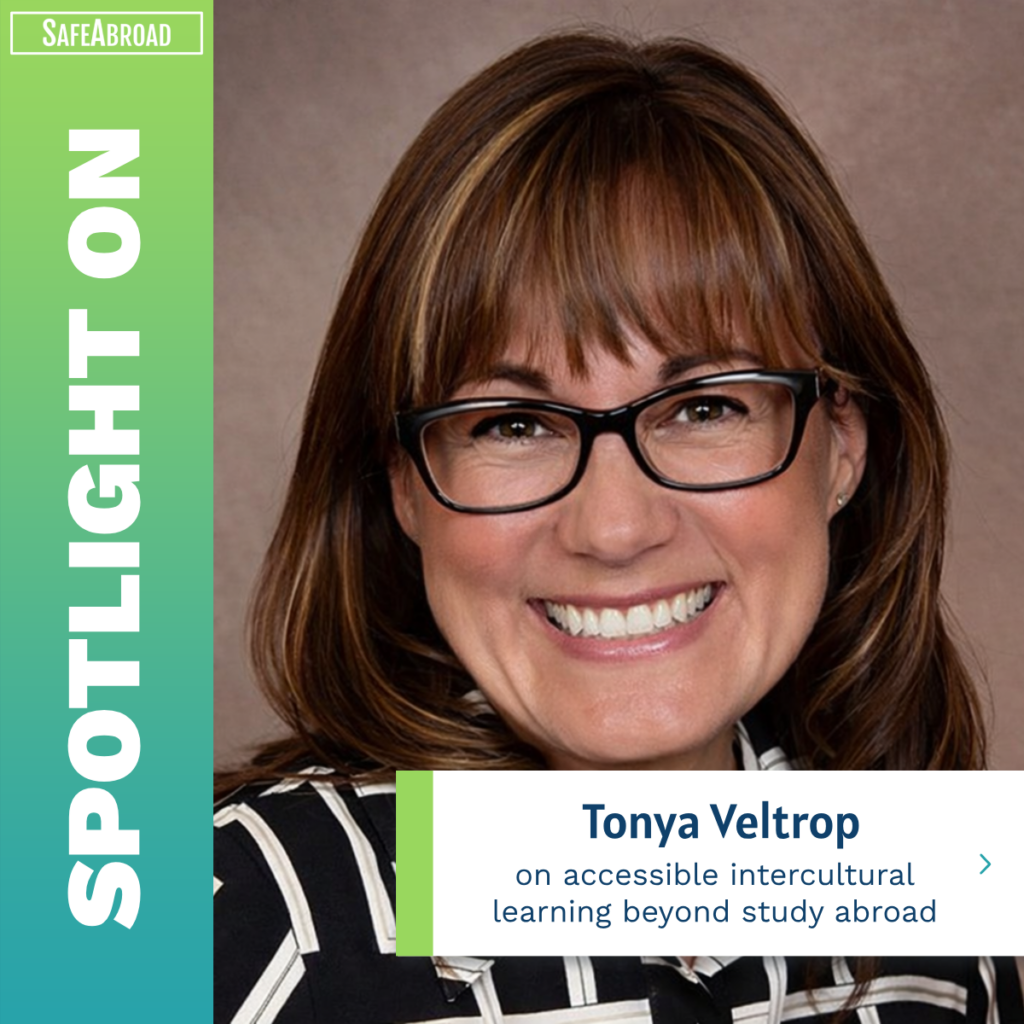

Can you briefly share your role at the University of Missouri and what your day-to-day looks like as Assistant Director for International Health, Safety, and Security?
Having that full picture—from recruitment to advising to sending students abroad—gives me empathy and perspective. I know what these experiences mean to students. I understand what it feels like to support them through challenges, and I want to help others navigate that, too.
Student health and well-being has been a thread throughout your career. What does supporting students before, during, and after travel look like in practice for you?
For me, it’s all about preparation. We can’t prevent everything, but we can give students the tools to handle challenges. I want them to know how to find support if something goes wrong—even if they don’t have all the answers themselves. It’s about building resilience and confidence.
I see my role like parenting in some ways: preparing my son—or our students—to be good world citizens who can face difficulties and come out stronger. That sense of accomplishment they feel afterward is the goal.
How have you seen risk management evolve, especially in light of recent global shifts?
There are so many more resources now, and the quality keeps improving. With tools like AI entering the conversation, we need to think creatively about how to use them to our advantage.
There’s also been a huge increase in external support providers and assistance organizations, which has really expanded what’s available to institutions. It feels like there’s a growing shared commitment across the field to support mobility and exchange.
What skills do you think are more important now for health and safety professionals than they were 10–15 years ago?
Communication and relationship-building have always mattered, but now it’s essential to go deeper. We need honest, authentic partnerships—not just transactions. At Mizzou, we now require all faculty-led programs to work with study abroad partners or providers. It’s not about adding cost—it’s about adding value and support. As a parent and a professional, I see how critical those partnerships are.
How have your personal travels shaped the way you think about student preparation and cultural awareness?
Profoundly. I was a Fulbright IEA grantee and have traveled extensively, and those experiences stay with me. For example, in Costa Rica, the “Pura Vida” mindset, in Japan, the philosophy of Ikigai and Ichigo Ichie—all these cultural concepts influence how I approach well-being and purpose.
When I help students prepare, I want them to look for those meaningful elements in their host culture—the local perspectives that shape how people live, connect, and find joy or peace. I hope those insights stay with them long after they return.
Outside of your professional work, you’re deeply involved in your community. How does that influence how you show up as a leader?
For me, it all comes back to connection. Supporting colleagues—especially newer professionals in the field—fills my cup. Whether it’s sending a note to someone dealing with a difficult student case or hosting our local international education network that’s been meeting monthly for 30 years, those acts of connection matter.
If I can support someone who’s supporting students, I feel like I’ve done something meaningful. That’s what keeps me going.