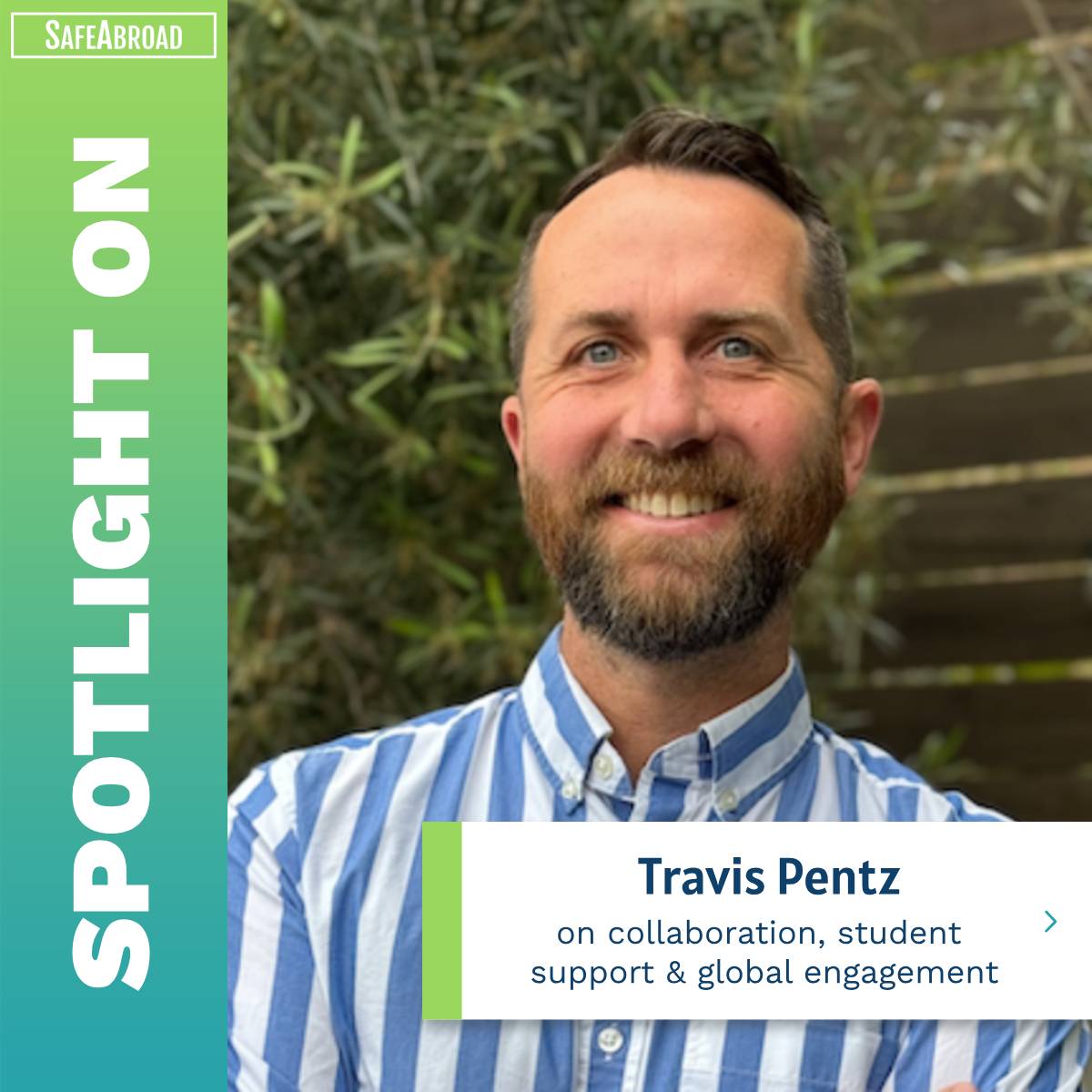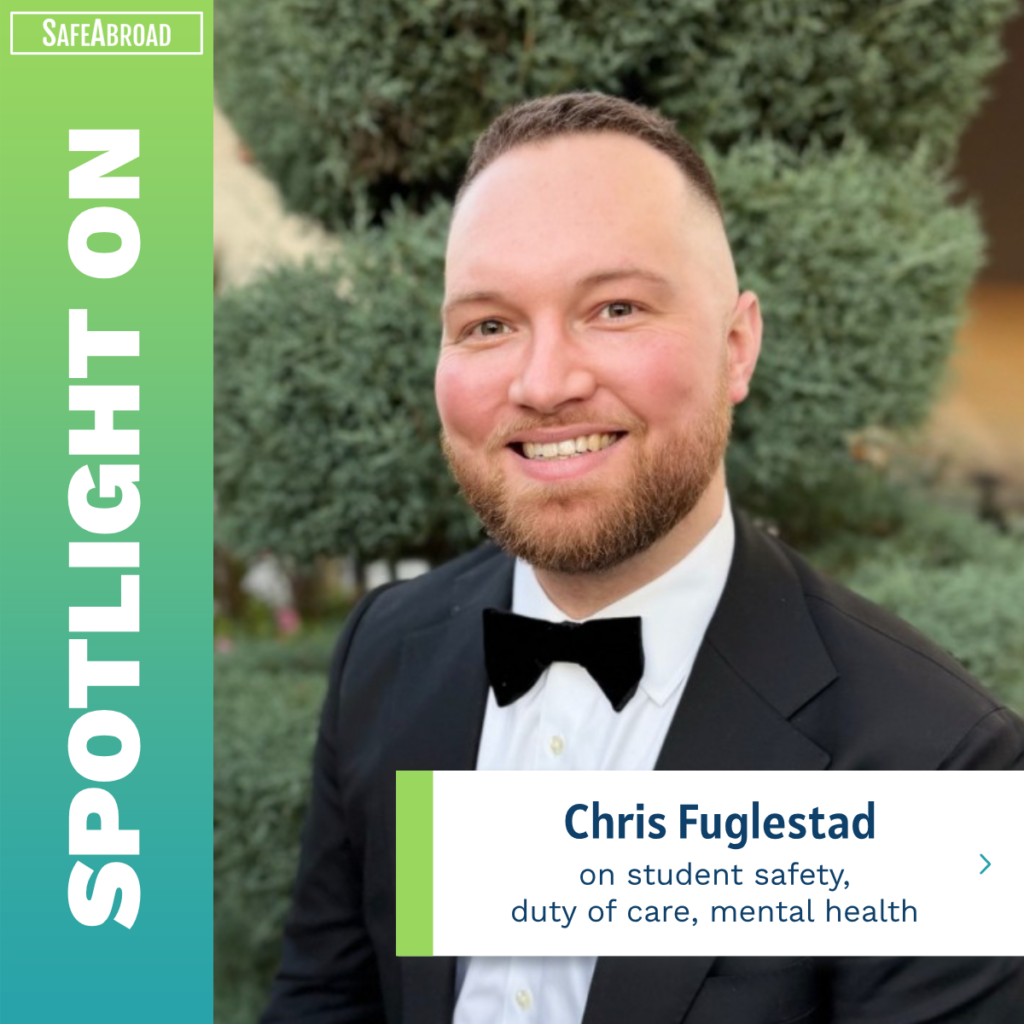

Let’s start with your origin story—what first sparked your interest in international education, and how did that early travel experience shape your personal and professional path?
I grew up in Wisconsin and took my first solo international trip to Greece and Turkey before my senior year of high school. That experience sparked my interest in international affairs. I chose the University of Oregon because it offered Norwegian language courses and strong international programming. I studied International Relations with a focus on cross-cultural communication and ethnic identity in Africa and spent a year living in Senegal. When I returned, I became a student worker in the international office, which really launched my path into international education.
After that, I worked briefly at CEA before starting a professional master’s program in French focused on international education. I interned at Laval University in Quebec and got exposure to Canadian approaches. Though I tried to return to the field right after my master’s, I ended up working in global health for several years, eventually joining the Medical University of South Carolina while also pursuing a PhD in medical anthropology at the University of Florida.
At UChicago, you oversee undergraduate health and safety. What guiding principles shape your approach to preparing students and faculty for global travel?
My main guiding principle is “duty of care.” I try to be proactive and provide as much relevant information as possible, even if students don’t always read it. We use Canvas—something they’re already familiar with—to host general and region-specific health and safety info, and we can track engagement.
It’s hard to know who’s an experienced traveler and who’s not, so I try to strike a balance between over- and under-preparing. For high-risk travel outside study abroad, students must get committee approval, but enforcement is tricky—there’s no institutional consequence if they don’t register. So I rely heavily on communication and collaboration with staff and faculty to flag those travelers.
And how do you encourage students to take ownership of their safety and preparation?
Honestly, sometimes they only learn through experience. When something happens abroad, they realize why the preparation mattered. But if nothing happens, they may assume they didn’t need it.
Many students come from privileged backgrounds and are used to having others solve their problems for them. So convincing them to take initiative is a challenge. I haven’t found a perfect solution, and I don’t think anyone has. Some institutions try incentives or consequences, but UChicago hasn’t taken that route. We just make the information available in multiple formats and repeat it often, hoping it sticks.
You mentioned “duty of care,” but what about students outside formal study abroad programs, like those doing independent research abroad?
That’s a big gap. Undergraduates are technically required to register their travel, but enforcement varies depending on funding source or department. Grad students, on the other hand, aren’t required to register at all. So I often find out about their travel after something goes wrong—hospitalizations, political unrest, etc.
I’ve advocated for broader registration and an institution-wide travel-safety role that covers more than just undergrad study abroad, but UChicago leadership views that as infringing on academic freedom. I disagree. We’re not preventing travel; we just want to know where people are. That way, we can help if needed. But so far, the institutional stance hasn’t shifted.
Beyond logistics and safety, what do students most need from us when they’re abroad?
Mental health support—hands down. Whether they seek counseling on campus or not, many students struggle when abroad. If they’re already in therapy here in Illinois, those providers often can’t continue care due to licensure restrictions.
We work closely with our college’s CARES team to prepare for crisis response and continuity of care. We try to make resources visible and available in multiple formats. Even if students don’t need them, having access can make a huge difference. That need isn’t going away anytime soon.
You’re also a musician, actor, and creative. How do the arts shape your approach to international education?
They’re vital. Acting, in particular, has taught me flexibility, improvisation, and presence—skills that are useful every day in this role. Crises can come at any moment, and being able to pivot and adapt is essential.
It also helps with public speaking—presenting orientations, talking to students and parents, communicating confidence even when things are uncertain. The arts taught me how to juggle multiple roles and stay calm under pressure.
Last question—what gives you hope about the future of study abroad, and what do you think it will take to keep evolving in the right direction?
Our numbers are growing. At UChicago, 46% of undergrads study abroad—nearly double the rate at some of our Ivy+ peers. That commitment gives me hope.
On the health and safety side, I see a strong network of professionals and providers working to improve the student experience. Partnerships and collaboration between institutions help raise the standard. We’re all working to evolve and meet students’ changing needs.