
Overview
SafeAbroad analysts have assessed that bears pose low to moderate risk to travelers visiting Japan. The number of bear encounters has significantly risen this last year impacting safety and travel. Government measures and the start of hibernation season, however, combine to decrease the likelihood of bear encounters in the coming months despite their growing range and frequency. Travelers should be aware of the increased risks as well as how they may be affected.
Key Takeaways
- Bear encounters in Japan have significantly risen. Attacks have become a nationwide public safety issue, with incidents increasingly occurring in populated and urban-adjacent areas.
- Authorities have taken steps to limit the number of bears in populated areas. Japanese soldiers have deployed in coordination with local authorities and hunters to cull bear populations. The Japanese government has also aimed to raise awareness of dangers associated with bear encounters.
- Despite the rising number of bear encounters, travelers are still unlikely to see them. Bears sightings are still unlikely even in areas where they are present, as they prefer to avoid human interaction when possible. Travelers can further decrease the risk of bear encounters during outdoor activities by taking preventative measures such as wearing bells during hikes and carrying bear spray.
Background
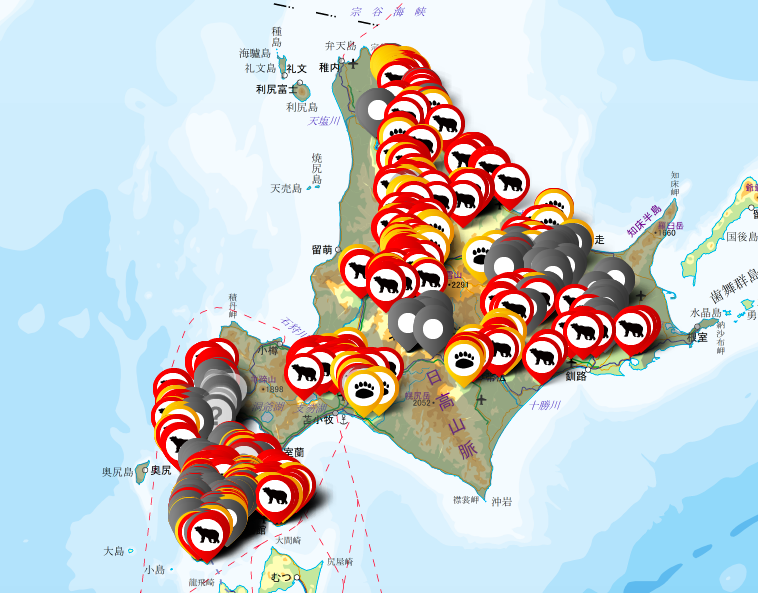
Bears encounters significantly increased in 2025, bringing attacks and travel disruptions that have caused fear and prompted the government to take action.
The number of bear encounters, attacks, and related disruptions significantly increased during 2025. Japan’s Ministry of the Environment reported that while 50 or more people are injured by bears annually since 2014, this figure rose to 213 in 2023 and around 220 people have been injured in 2025 with 13 deaths.2 Incidents are no longer confined to remote mountain areas; bears are increasingly reported in towns, near schools, transportation hubs, and commercial areas.3 4 East Japan Railways (EJR) reported 71 bear related disruptions to services between April and October, up from the 11 cases in 2024.5 The increased bear presence also raises the likelihood of the animals wandering on train tracks and causing collisions.6 Bears have even disrupted air travel, such as when Iwate Hanamaki Airport had to temporarily close after one ran on the runway on November 12.7 The rising number of injuries and deaths resulting from bear encounters has prompted the Japanese government to take action.
The increase of attacks has entered public consciousness, with the fear of bear attacks prompting even changes in business policies. Stores are updating policies to combat bear-related risks. Lawson convenience stores are advised to switch their automatic doors to manual when bears are in the area, while 7-Eleven stores are even allowed to close when bears are spotted nearby. 8
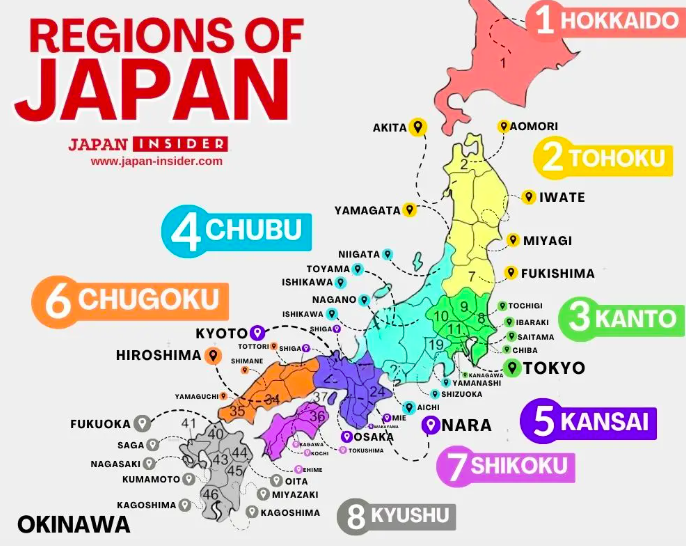
Most attacks took place in Tohoku, accounting for two thirds of all attacks.10 Within Tohoku, the most affected prefecture in all of Japan is Akita with 66 injured and 4 killed this year.11 Hokkaido is the second largest source of these attacks, with its native brown bear accounting for two deaths this year.12 However, bear attacks and encounters have taken place across all of Honshu (Japan’s biggest main island), including its southernmost province of Chugoku.13 14 The risk of bear encounters in Chiba, Shikoku, Kyushu, and Okinawa are low to none.15 Travelers should note that bears do not live on Kyushu.16 While the risk of seeing bears in the Tokyo prefecture is low, the area still had 142 sightings between April and October of 2025.17
Experts attribute the surge to a combination of food shortages due to poor nut and acorn harvests, warmer temperatures affecting hibernation patterns, and rural depopulation leading to reduced land management in forest-edge communities.18 These factors, combined with a growing bear population, have increased the likelihood of bears venturing into human environments in search of food. Bear distribution areas continue to grow; Hokkaido’s distribution area grew 30 percent larger and Honshu’s 40 percent larger between 2003-2018.19 Travelers should also be aware of their behavior in addition to their geographic distribution. Bears become more active during the fall, as they extend their active hours into the night.20 The Asian black bears that live on Honshu are an aggressive species; bears in Japan are more likely to react fiercely when startled rather than flee such as their North American counterparts.21
In response, Japanese authorities expanded emergency countermeasures, including relaxed regulations allowing faster removal of bears in populated areas and increased coordination between police, hunters, and local governments.22 Some prefectures sought assistance from the Self-Defense Forces for logistical support and were given 900 soldiers to assist them, while many municipalities have invested in public warning systems, patrols, and education campaigns.23 24
On the Horizon
The number of bear encounters is likely to decrease over the coming months due to government actions and hibernation; however, bear encounters may still occur as travelers head north for Japan’s winter season. Bear encounters over the coming year, however, are expected to increase.
What to watch for in the coming months and year:
- Peak bear activity season for this year is almost over. Bears will reduce their active hours over the coming months as they are ready for hibernation; they will start to become more active again in March.25 They will likely continue to expand their geographic areas in search of food starting in March, which will bring them increasingly closer to human settlements.
- Winter sports will bring more travelers to Northern Japan. Winter sports season starts in mid to late-December and attracts many enthusiasts to northern regions such as Hokkaido and Tohoku.26 This will raise the risk of travelers encountering bears during what is usually a down period for bear encounters. As Japan’s winter sports market continues to grow, this will make bear encounters increasingly likely year after year.27
- Bear-related travel disruptions will increase in the long-term. As bear activity this year starts to decrease, they will be less likely to wander onto train tracks and runways creating disruptions. However, government measures to limit bear ranges and cull their numbers near populated areas will likely have a limited impact on future travel disruptions. Many trains run through rural areas where bear impact limiting measures will receive less focus, while airports are often placed on the edges of towns near bear populated areas.
- https://higumap.info/recent
↩︎ - https://www.britannica.com/science/Why-Have-There-Been-So-Many-Bear-Attacks-in-Japan-in-2025
↩︎ - https://www.nippon.com/en/in-depth/d01186/
↩︎ - https://www.stripes.com/theaters/asia_pacific/2025-12-15/bear-attacks-japan-troop-deployments-20105392.html
↩︎ - https://www.straitstimes.com/asia/east-asia/amid-rise-in-bear-attacks-japans-businesses-take-precautionary-measures-to-protect-workers ↩︎
- https://www.afpbb.com/articles/-/3489278
↩︎ - https://www.nbcnews.com/world/japan/japan-bear-attacks-warning-americans-us-embassy-state-department-rcna243878
↩︎ - https://www3.nhk.or.jp/nhkworld/en/news/20251110_B2/
↩︎ - https://www.japan-insider.com/japan-regions-map/
↩︎ - https://www.japantimes.co.jp/news/2025/12/06/japan/society/japan-casualties-record/
↩︎ - https://www.stripes.com/theaters/asia_pacific/2025-12-15/bear-attacks-japan-troop-deployments-20105392.html
↩︎ - https://www.asahi.com/ajw/articles/16142924
↩︎ - https://www.japantimes.co.jp/news/2024/11/04/japan/society/japan-chugoku-region-bears/
↩︎ - https://www.google.com/maps/d/u/0/viewer?mid=1g5S_PUzzPjzY5UFp8IBBamT0vOhOGvg&%3Bamp%3Bfemb=1&%3Bamp%3Bll=35.046082444713896%2C133.09690604999997&%3Bamp%3Bz=7&ll=34.92073906736904%2C134.22575126484372&z=7
↩︎ - https://www.gltjp.com/en/article/item/21210/
↩︎ - https://www.gltjp.com/en/article/item/21210/
↩︎ - https://www.japantimes.co.jp/news/2025/12/06/japan/society/japan-casualties-record/ ↩︎
- https://www.gltjp.com/en/article/item/21210/
↩︎ - https://www.koreatimes.co.kr/world/20251115/bear-attacks-surge-in-japan-as-bears-increasingly-lose-fear-of-humans
↩︎ - https://www.gltjp.com/en/article/item/21210/
↩︎ - https://www.koreatimes.co.kr/world/20251115/bear-attacks-surge-in-japan-as-bears-increasingly-lose-fear-of-humans
↩︎ - https://www.themeateater.com/conservation/wildlife-management/japanese-military-and-hunters-team-up-to-tackle-growing-bear-problem
↩︎ - https://www.stripes.com/theaters/asia_pacific/2025-12-15/bear-attacks-japan-troop-deployments-20105392.html
↩︎ - https://www.the-independent.com/asia/japan/japan-bear-attacks-kyoto-warnings-tourists-b2875440.html
↩︎ - https://www.gltjp.com/en/article/item/21210/
↩︎ - https://www.jrailpass.com/blog/snow-season-japan
↩︎ - https://www.futuremarketinsights.com/reports/japan-mountain-and-ski-resort-market
↩︎