Background
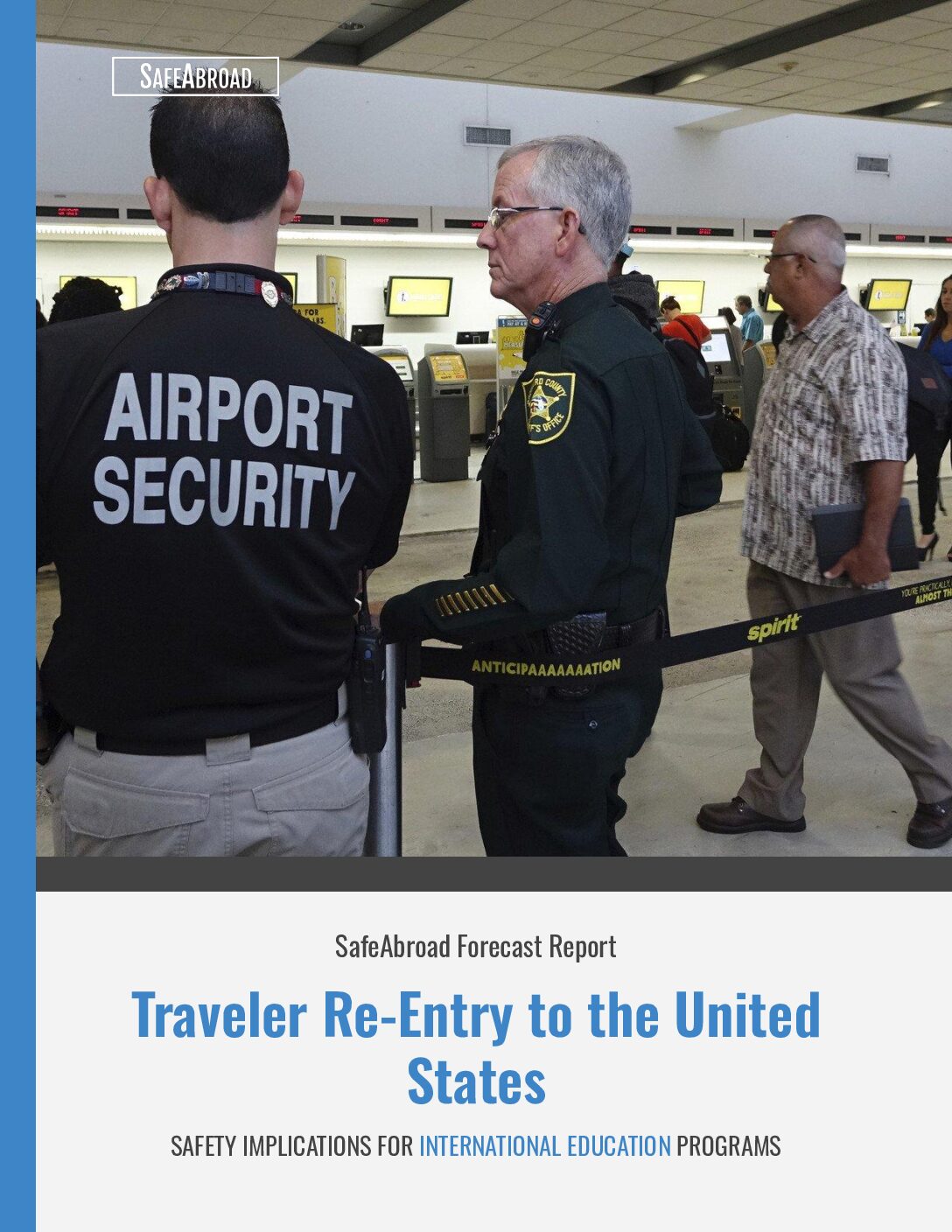
Re-entering the United States after studying abroad is often overlooked but can pose real challenges—particularly for non-citizens. Recent immigration policy shifts have led to increased scrutiny at U.S. borders, where officers are encouraged to conduct more thorough inspections and may deny entry to individuals perceived as holding “hostile attitudes” toward the United States. These perceptions can be based on questioning or, in rare cases, reviews of electronic devices.
Despite growing concern, device searches remain uncommon: fewer than 0.01% of international travelers were subject to such searches in 2024, although non-citizens were over three times more likely to be selected. Importantly, U.S. citizens cannot be denied re-entry for any reason, including the content of their personal devices or social media.
While high-profile cases may draw media attention, they are exceptions. The vast majority of travelers re-enter the U.S. without issue. Understanding current policies and preparing thoroughly can help ensure a smooth and stress-free return.
Tips for Seamless Re-Entry into the United States
Due to evolving immigration policies and increased scrutiny at U.S. borders, all travelers—especially non-citizens—should prepare thoroughly to avoid delays, questioning, or denial of entry. The following recommendations will help ensure a smoother re-entry process.
Before You Travel
- Keep Essential Documents Accessible | Store all required documents (e.g., passport, visa, green card, Form I-20, proof of SEVIS fee payment, and travel itinerary) in your carry-on luggage—not your checked bag—for quick access during inspection.
- Verify Document Validity | Ensure your passport and any immigration documents are valid for at least six months beyond your entry date. If you are a student or visa holder, confirm that your visa and I-20/DS-2019 are still valid and signed for travel (if applicable).
- Prepare Supporting Evidence | Legal Permanent Residents (LPRs, aka “green card” holders) and visa holders should carry documentation demonstrating ties to the U.S., such as:
- Tax Returns
- Utility bills or lease agreement
- School enrollment records or transcripts
- Employment letters or pay stubs
- Bank statements
- Avoid Suspicious Device Behavior | Do not delete large amounts of data from your phone or laptop before travel, as this can raise red flags. If you remove sensitive content, permanently delete it from the trash/recently deleted folder as well.
- Disable Biometric Unlocking | Turn off facial recognition and fingerprint ID on your devices. If you don’t wish to unlock your phone, this precaution helps prevent involuntary access. U.S. citizens and LPRs cannot be denied entry for refusing to unlock a device or to provide a password.1
- Back Up Your Data | Consider backing up your devices to a secure cloud service or encrypted drive before travel. If your devices are searched or confiscated, you will still have access to your data.
- Be Cautious with Social Media | CBP may review public content on your social media accounts. Avoid posts that could be interpreted as hostile to the U.S., sympathetic to banned groups, or politically inflammatory—especially if you’re a non-citizen. Non-citizens may be asked about their views, affiliations, or past statements.
At the Border
- Remain Calm and Courteous | Cooperate respectfully with CBP officers. Arguing, showing frustration, or refusing to answer basic questions (like identity or travel purpose) can escalate the situation or delay processing.2
- Expect Possible Electronic Device Searches | CBP officers have the authority to inspect electronic devices without a warrant.3 Advanced searches (e.g., forensic copying) require approval from a supervisor.4 Devices may be temporarily seized for further review.
- Know What You Can Refuse
- U.S. citizens and green card holders: Can refuse to unlock their device or provide a password and cannot be denied entry for doing so.5
- Non-citizens: Can be denied entry if they refuse access to their devices.
- Do Not Sign Anything You Don’t Understand | You are not required to sign any document at the border. If asked to sign something you don’t understand, request a translation or legal explanation. Signing Form I-407, for example, can result in losing your green card—don’t sign it unless you intend to abandon your residency.
- Request a Supervisor | If you believe you are being mistreated, discriminated against, or subject to unreasonable questioning, you can respectfully ask to speak with a supervisor.
- Document Any Incident | If your belongings are searched or seized, write down:
- The officer’s full name and badge number
- The time and location of the incident
- A description of what was taken or discussed
- Understand Secondary Screening | If you’re selected for secondary screening, this may include additional questioning, waiting in a separate area, and device inspection. You may not have access to your phone during this time. While you do not have the right to an attorney during routine questioning, you can ask to contact your consulate if you are detained.
Additional Notes
- Travel During Business Hours | Aim to arrive in the U.S. between 9:00 AM and 5:00 PM (Monday to Friday), when CBP supervisors and legal resources are more readily available.
- Use Mobile Passport Control (MPC) | U.S. citizens, Canadian visitors on B-1/B-2 visas, and travelers under the Visa Waiver Program with valid ESTA may use the Mobile Passport Control app to streamline customs processing at participating airports.
- File a Complaint, if Needed | If you experience mistreatment at the border, you can file a formal complaint with the U.S. Customs and Border Protection via their customer service website.
- Special Circumstances | Even if you’ve followed every recommendation, border decisions can sometimes be unpredictable. Staying informed, organized, and calm is your best defense. If you have prior criminal charges, immigration violations, or anticipate issues, consult an immigration attorney before traveling.
Your Rights at the U.S. Border
Crossing the U.S. border can involve complex legal and procedural issues, especially for non-citizens. U.S. Customs and Border Protection (CBP) officers are granted broader authority than typical law enforcement, and constitutional protections are more limited at the border. Even U.S. citizens do not enjoy the full scope of constitutional rights until they are inside the country.6
All Travelers
All travelers, regardless of citizenship, should be aware of the following:
- Right to Remain Silent: You may remain silent during questioning, but only U.S. citizens are guaranteed entry if they do so.
- Searches: Refusing a search is not permitted at the border. While officers may conduct routine searches freely, more invasive searches typically require reasonable suspicion.7 You may be detained for as long as reasonably necessary until CBP is able to verify your identity and citizenship.
- Right to Counsel: The right to an attorney is limited at the border. Brief questioning does not entitle you to legal counsel. However, if you are formally detained, you may request legal representation—though the government will not provide one. You can ask for a list of legal aid organizations.8
- Electronic Searches: Advanced searches of devices (e.g., using external equipment to copy data) require approval from a supervisor. CBP officers cannot access your password-protected cloud storage, work email, or force you to make private social media accounts public.9
- Customs Laws: All travelers must comply with customs laws, including: declaring all goods purchased abroad (duty-free limit: $800); declaring agricultural goods and declaring currency over $10,000—failure to do so may result in seizure and penalties.10
U.S. Citizens
U.S. citizens have the strongest legal protections when reentering the U.S.:
- Guaranteed Reentry: You cannot be denied entry once you prove your identity and citizenship.11
- Required Questions: You must answer questions confirming your identity, citizenship, and customs declarations. Other questions are optional, though refusing to answer may delay your entry.12
- Searches: CBP officers may search your luggage and electronic devices without a warrant or suspicion. However, you are not required to provide passwords.13 Devices may be confiscated for further inspection, but you cannot be denied reentry for refusing access.
Legal Permanent Residents (LPRs)
Green card holders have significant rights, but also face increased scrutiny:
- Reentry Rights: LPRs cannot be denied entry if they prove their status, though refusing to answer additional questions may delay the process.
- Fingerprinting: Routine biometric collection is required.14
- Green Card Protections: Officers cannot revoke your green card or force you to sign Form I-407 (voluntarily abandoning status). Only an immigration judge can revoke lawful permanent residency.15
- Expired Green Cards: If your green card expires while abroad, you must obtain a boarding foil from a U.S. Embassy or Consulate to return.16
- Device Searches: Though rare, LPRs’ devices may be inspected. There have been instances where green card holders’ visas were canceled due to content found on social media or devices—particularly posts related to political groups or causes.17
- Extended Absences: Spending over 180 days outside the U.S. may be interpreted as abandoning residency. To avoid complications, submit Form I-131 before extended travel.18
- Other Risks: LPRs can be denied reentry for criminal convictions, overstaying a prior visit, or behavior suggesting intent to reside outside the U.S.
Non-Citizens and Visa Holders
Non-citizens, including visa holders, have the fewest rights at the border:
- No Guaranteed Entry: Entry is at the discretion of CBP, even with a valid visa. Refusing to answer questions, including those about political or religious beliefs, can result in denial of entry.
- Social Media Usage: Students should be cautious with social media use. Government authorities may monitor social media accounts of non-citizens, and posts deemed inconsistent with “American values” could lead to visa suspension or denial.19
- Device Access: Refusal to unlock a device may also lead to denied entry.20
- No Right to Counsel: During standard screening, you do not have the right to an attorney or a phone call. If formally detained, you may contact your embassy or consulate.21
- Language Access: If you’re asked to sign a document you don’t understand, you have the right to request translation.22
Short-Term Visa Holders
- These travelers are subject to the same limitations as other non-citizens and may be denied entry for any number of reasons.
- A visa only grants permission to request entry—it does not guarantee it.23
- F-1 Students should carry:
- Valid passport (minimum six months remaining)
- Form I-20
- Proof of SEVIS fee payment
- University ID and proof of enrollment
- https://news.northeastern.edu/2025/04/09/can-border-patrol-search-your-phone ↩︎
- https://www.aclunc.org/our-work/know-your-rights/know-your-rights-us-airports-and-ports-entry ↩︎
- https://www.cbp.gov/travel/cbp-search-authority/border-search-electronic-devices ↩︎
- https://www.usatoday.com/story/travel/news/2025/03/21/border-control-phone-search/82594653007/ ↩︎
- https://news.northeastern.edu/2025/04/09/can-border-patrol-search-your-phone ↩︎
- https://sites.uclawsf.edu/immigration/immigrant-rights-clinic/your-rights/at-the-border/ ↩︎
- https://www.aclunc.org/our-work/know-your-rights/know-your-rights-us-airports-and-ports-entry ↩︎
- https://insight.dickinsonlaw.psu.edu/pslr/vol124/iss2/3/ ↩︎
- https://www.usatoday.com/story/travel/news/2025/03/21/border-control-phone-search/82594653007/ ↩︎
- https://www.nationalsecuritylawfirm.com/global-entry-and-u-s-customs-declarations-what-you-need-to-know-to-protect-your-trusted-traveler-status ↩︎
- https://www.aclunc.org/our-work/know-your-rights/know-your-rights-us-airports-and-ports-entry ↩︎
- https://www.aclunc.org/our-work/know-your-rights/know-your-rights-us-airports-and-ports-entry ↩︎
- https://news.northeastern.edu/2025/04/09/can-border-patrol-search-your-phone ↩︎
- https://www.aclunc.org/our-work/know-your-rights/know-your-rights-us-airports-and-ports-entry#item-4679 ↩︎
- https://www.aclunc.org/our-work/know-your-rights/know-your-rights-us-airports-and-ports-entry ↩︎
- https://jp.usembassy.gov/visas/immigrant-visas/green-card/boarding-foil/ ↩︎
- https://www.usatoday.com/story/travel/news/2025/03/21/border-control-phone-search/82594653007/ ↩︎
- https://blog.marble.co/immigration/green-card-180-day-rule ↩︎
- https://www.state.gov/releases/office-of-the-spokesperson/2025/06/announcement-of-expanded-screening-and-vetting-for-visa-applicants/ ↩︎
- https://www.aclunc.org/our-work/know-your-rights/know-your-rights-us-airports-and-ports-entry#item-4682 ↩︎
- https://ogc.harvard.edu/book/entering-or-re-entering-us-guidance-about-border-security-measures-ports-entry ↩︎
- https://www.aclunc.org/our-work/know-your-rights/know-your-rights-us-airports-and-ports-entry ↩︎
- https://travel.state.gov/content/travel/en/us-visas/tourism-visit/visitor.html/visa ↩︎