Overview
SafeAbroad analysts have assessed that the Middle East will remain significantly more unstable following the outbreak of conflict on February 28. Israeli, American, and Iranian airstrikes have led to an expanded conflict across many nations that were originally nonparticipants. While the conflict is not expected to become protracted, the risk of violent flare-ups will likely remain higher even after the immediate fighting ends.
Key Takeaways
- Airstrikes across the Middle East have degraded regional security. Exchanges of airstrikes between Israel, Iran, and the US on February 28 contributed to wider attacks throughout the region. Many nations issued evacuation notices advising their citizens to leave the Middle East.
- Airspace has been partially reopened, and the number of stranded travelers is decreasing daily. Initial airspace closures, combined with evacuation notices, left many travelers stranded in the Middle East. The gradual reopening of Gulf states’ airspaces, along with the addition of evacuation flights, is continuing to reduce the number of stranded travelers.
- Civilian casualties outside of Iran and southern Lebanon have remained relatively limited. Regional air defense systems have intercepted many incoming missiles and drones reducing the potential impact of attacks across the Middle East. Most nations affected report only a small number of civilian deaths. Airstrikes in Iran and against Hezbollah targets in southern Lebanon have produced the largest death totals in the region.
Background
A series of missile exchanges and drone strikes has prompted regional evacuations, heightened security measures, and travel disruptions across the Middle East.
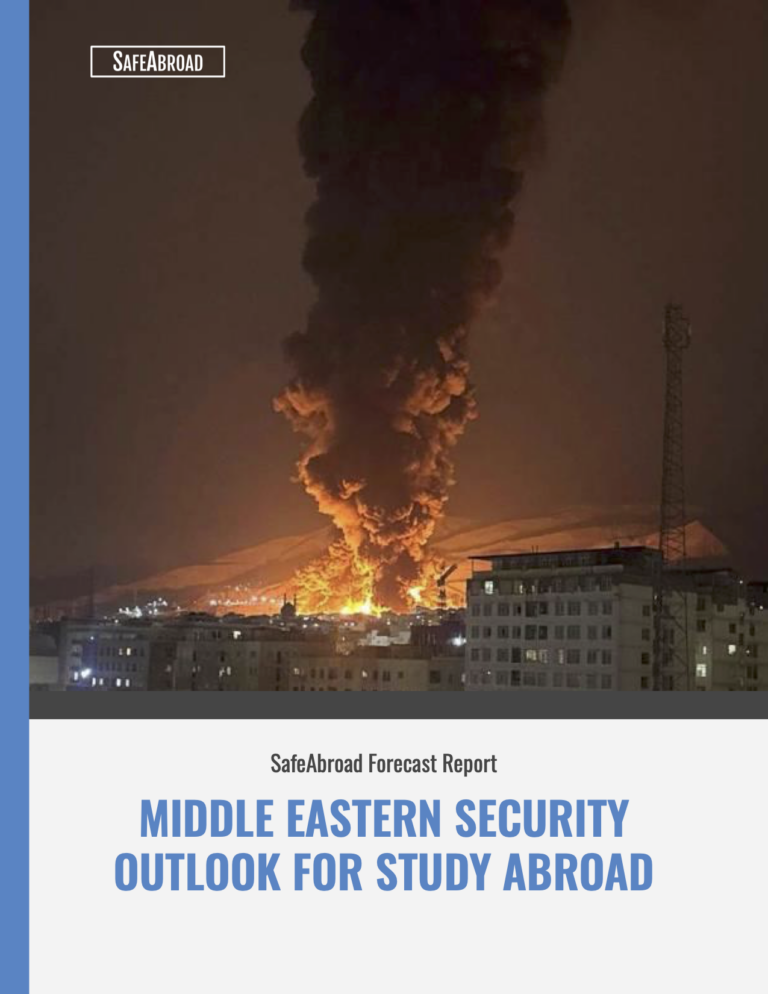
Following failed negotiations over Iran’s nuclear program, the United States and Israel conducted joint strikes across Iran on February 28. This prompted immediate retaliation, where Iranian drones and missiles struck Israel, US bases, and civilian targets across the Middle East. While the majority of Iranian attacks across the Middle East have been aimed at US bases, several civilian sites have been targeted as well. This includes the Burj Al Arab hotel and Zayed International Airport in the UAE, Kuwait International Airport, and residential areas of Bahrain.1 2 3 These locations all sustained limited damage in large part due to the effectiveness of defensive countermeasures. Between the outbreak of the conflict on February 28 and March 3, the UAE had shot down 755 of 812 drones with just 1 of 183 missiles getting through.4 These numbers are largely reflective of defense systems throughout the region, which have greatly limited loss of life across the Middle East.
These strikes led to the closure of airspace across the region, prompting the cancellation of over 46,000 flights across the Middle East.5 Airspace remains closed over Iran, Iraq, Bahrain, and Kuwait with significant restrictions on Saudi, Emirati, Qatari, Israeli, and Omani airspace.6 An evacuation order by the US Department of State on March 2 led to a surge in demand for commercial flights out of the region during a time of already limited service.7 This has sparked major criticism against the department, which advocated for the commercial departure of a number of US citizens that it was not prepared to handle.8 The massive crowds of stranded travelers originally stuck in the region have slowly been declining in size as flights resume through partially opened airspaces and specially added evacuation flights.9 The majority of flights out of the Gulf states first travel to Egypt, where they then depart for final destinations.10
Since the outbreak of war, there have been several significant attempts to expand the conflict. NATO defenses shot down two missiles over Turkish airspace since the outbreak of the war.11 This was in addition to an Iranian drone strike against a British military base on Cyprus.12 Both of these attacks indicate an effort by Iran to expand the geographic range of the conflict and increase the number of participants involved. Additional defense personnel and equipment have been deployed in both Cyprus and Turkey, with several European nations also dedicating resources to their protection.13 14 Hezbollah, an Iranian-backed terrorist group based in southern Lebanon, has also resumed attacks against northern Israel in solidarity with Iran. This has led to the largest number of deaths in the region outside of Iran, with an estimated 634 Lebanese civilians having died since the resumption of the fighting.15 Israel has responded with a renewed bombing campaign to the attacks.16
US and Israeli strikes continue to grow in strength and frequency without an official timeline given as to when the conflict might end.17 President Trump and his officials indicate that they will end attacks when all their objectives have been achieved.18 The Iranian government’s messaging has been mixed as to the future of regional retaliatory strikes. On March 7, Iranian President Pezeshkian apologized for the strikes across the Middle East, indicating that the political leadership did not have full control over the military, which was only supposed to target US bases.19 The Islamic Revolutionary Guard Corps (IRGC) immediately followed with a statement that the attacks would not cease.20
The US Department of State issued a worldwide caution advising Americans to remain vigilant on February 28.21 American consulates and embassies have been the sites of several attacks following the outbreak of the conflict with Iran. Three men were arrested for the bombing of the US embassy in Oslo, Norway, on March 8.22 The US consulate in Toronto was also attacked in a drive-by shooting that damaged the exterior of the facility on March 10.23 While no injuries resulted from either attack, both locations have implemented increased security measures in what are usually considered very safe areas.
On the Horizon
Overall, the Middle East will become an increasingly dangerous region for travelers, despite any likely ceasefire agreements over the coming weeks. This degraded security environment is also likely to result in further airspace closures, impacting both regional flights and those crossing over it.
What to watch for over the next month:
- The conflict will likely reach an uneasy ceasefire over the coming weeks. The US will likely look to negotiate a ceasefire to preserve its already depleted missile inventory and maintain readiness for potential larger strategic threats, notably a possible conflict with China. Spiking gas prices are also taking a political toll on the administration, with consumers across the political spectrum frustrated by heightened consumer prices that predated the conflict. The notable lack of an American ground force buildup also indicates a desire for a quick campaign. Iran will also likely seek a ceasefire to consolidate its remaining power. The Iranian political leadership remains weak following the death of former Supreme Leader Ayatollah Khamenei, providing an opportunity for the IRGC to assert its influence over the nation’s future. A period of relief from US and Israeli strikes would also allow Iran to reinforce its regional proxy network.
- The Middle East is likely to remain less safe even after a ceasefire agreement. If the Iranian regime survives the conflict, it will likely either be led by a more confrontational Supreme Leader Mojtaba Khamenei or by bellicose IRGC leaders.24 These groups are expected to seek aggressive policies that could undermine regional stability following an initial regrouping period. If the regime collapses, the majority of violence will likely remain within Iran; however, the risk of sporadic terrorist attacks by regime hardliners across the region would rise. US citizens will also likely face a uniquely higher risk of retaliation by Iran and associated terrorist groups. This would most likely take the form of kidnappings and attacks against American-affiliated locations such as embassies.25 26
- Middle Eastern airspace will likely reopen outside of Iran but will remain subject to sudden closures. Gulf states are already reopening airspace in response to massive groups of travelers seeking to leave the region. As Iranian attacks continue to slow down, the complete reopening of airspace (with the exception of Iranian airspace) appears likely in the near future.27 As a consequence of the degraded security environment, any breach of a ceasefire or violation of any agreed treaty would likely prompt a quick airstrike and subsequent airspace closures. As governments remain on edge, preemptive airspace closures also remain a possibility in the short term.
- Iranian-backed terrorist attacks will pose the largest threat to the US homeland. Lone wolf, ideologically driven attacks inspired by Iranian calls for violence, such as the deadly shooting in Austin, Texas, on March 1, remain a serious threat to US citizens in the homeland.28 Risks associated with Iranian “sleeper-cell agents” are lower than lone-wolf, ideologically driven attacks but should still be considered credible, as reflected in recent FBI alerts to law enforcement agencies.29 30 The likelihood of drone attacks against the West Coast is low despite precautionary warnings.31 Iran’s navy has been rendered ineffective following repeated US strikes, which makes seaborne drone launches unlikely.32 33 Drone attacks assisted by cartels from Mexico are also largely unlikely, given the cartels’ preference to avoid actions that would prompt direct US intervention, which would jeopardize their operations.
- https://www.longwarjournal.org/archives/2026/03/iranian-drone-and-missile-barrages-strike-arab-states-across-the-region-march-9-10-updates.php
↩︎ - https://www.aljazeera.com/news/2026/3/12/iran-targets-gulf-nations-with-missiles-drones-as-oil-prices-soar
↩︎ - https://www.the-independent.com/news/world/americas/us-politics/burj-al-arab-hotel-fire-dubai-iran-drone-b2929612.html
↩︎ - https://www.axios.com/2026/03/03/uae-iran-missiles-strike-israel
↩︎ - https://www.bloomberg.com/news/articles/2026-03-12/-horrendously-high-fares-bomb-fears-upend-spring-travel-plans-amid-iran-war
↩︎ - https://ops.group/blog/middle-east-airspace-current-operational-picture/
↩︎ - https://x.com/AsstSecStateCA/status/2028588420403241021?s=20
↩︎ - https://www.politico.com/news/2026/03/04/evacuation-middle-east-iran-war-00812898
↩︎ - https://apnews.com/article/stranded-travelers-us-response-iran-war-b7a5da348d4fee76ac4a662bc16cf627
↩︎ - https://ops.group/blog/middle-east-airspace-current-operational-picture/
↩︎ - https://www.defensenews.com/global/europe/2026/03/09/nato-defenses-shoot-down-ballistic-missile-in-turkey/
↩︎ - https://www.pbs.org/newshour/world/europe-rallies-around-cyprus-after-iranian-drone-hits-island
↩︎ - https://www.cbsnews.com/news/iran-war-why-cyprus-is-so-important-to-europe/
↩︎ - https://www.paturkey.com/news/2026/iranian-missiles-over-turkey-why-patriot-systems-intercepted-28747/
↩︎ - https://www.fdd.org/analysis/2026/03/11/lebanon-war-intensifies-as-idf-strikes-harder-and-hezbollah-escalates-attacks/
↩︎ - https://abcnews.com/International/strikes-israel-hezbollah-ramp-evacuation-notice-issued-beirut/story?id=130981948
↩︎ - https://www.pbs.org/newshour/show/as-iran-shows-no-signs-of-surrender-u-s-launches-most-intense-day-of-strikes
↩︎ - https://www.axios.com/2026/03/11/trump-iran-war-end-withdrawal
↩︎ - https://www.npr.org/2026/03/07/g-s1-112858/iran-president-statement
↩︎ - https://www.aljazeera.com/news/2026/3/8/why-are-iranian-leaders-sending-mixed-messages-on-gulf-attacks
↩︎ - https://travel.state.gov/en/international-travel/travel-advisories/global-events/worldwide-caution.html
↩︎ - https://www.cbsnews.com/news/us-embassy-explosion-norway-oslo-arrests/
↩︎ - https://time.com/article/2026/03/11/us-embassy-toronto-canada-oslo-consulates-shooting-attack-explosion/
↩︎ - https://www.washingtoninstitute.org/policy-analysis/what-kind-supreme-leader-would-mojtaba-khamenei-be
↩︎ - https://www.csis.org/analysis/how-would-iran-respond-us-attack
↩︎ - https://www.justice.gov/archives/opa/pr/iranian-intelligence-officials-indicted-kidnapping-conspiracy-charges
↩︎ - https://www.nytimes.com/2026/03/11/world/middleeast/iran-weapons-missiles-israel-gulf.html
↩︎ - https://www.cbsnews.com/news/mass-shooting-at-austin-texas-bar-leaves-at-least-3-dead-multiple-people-wounded/
↩︎ - https://abcnews.com/US/iran-activating-sleeper-cells-alert/story?id=130897687
↩︎ - https://komonews.com/news/nation-world/fact-check-team-sleeper-cell-risks-spike-as-iranian-strikes-continue-united-state-intelligence-target-operatives
↩︎ - https://abcnews.com/US/fbi-warns-iran-aspired-attack-california-drones-retaliation/story?id=130973820
↩︎ - https://www.reuters.com/world/asia-pacific/sri-lanka-rescues-30-people-board-distressed-iranian-ship-foreign-minister-says-2026-03-04/
↩︎ - https://www.csis.org/analysis/how-lose-navy-10-days
↩︎